Why Do My Mix Decisions Get Worse the Longer I Listen?
You start the session hearing the vocal as a little too sharp. An hour later, you have cut some top end, boosted it back, added a compressor, and started wondering whether the whole mix needs a different reverb. The session is still open, but your confidence is gone.
This is common. Mix decisions can get less reliable as listening time accumulates—not because your ears suddenly stop working, but because listening is demanding. Your attention wears down, your hearing adapts to repeated sound, and small uncertainties begin to feel like problems that need fixing. That combination is often called decision fatigue and ear fatigue.
The remedy usually isn’t a more expensive plugin or one last loud playback. It’s a repeatable session: a fixed start time, check here sensible monitoring levels, scheduled listening breaks, and a clear stopping point. After years of late-night sessions, I’ve found that boring routines beat heroic marathons. I keep water on the console, set a 10-minute timer for ear breaks, and write one line about what to do next before shutting down.
What’s happening when your mix judgment slips?
Your attention is a limited resource
Mixing involves more than hearing whether a sound is pleasant. You’re comparing levels, tracking the song’s emotional direction, checking translation, and deciding which imperfections matter. Every choice uses attention. After enough choices, you may start making them faster just to get through the session—or keep reopening decisions you already settled.
That’s decision fatigue: a useful everyday description of how judgment can become less steady after a long run of choices. It doesn’t mean every late-session decision is wrong. It means you have less reason to trust subtle, untested changes made when you’re tired. A 1 dB vocal move that seemed obvious at the start may become a guess by the end.
Your ears adapt to what they hear
Play the same dense mix for a long time and it can begin to sound normal, even if it’s too bright, too loud, or unbalanced. Your perception adjusts to a repeated sound. You can lose perspective on the very thing you’re trying to judge, then compensate by making more changes. That’s one way ear fatigue can show up in a session.
There may also be physical fatigue: temporary dullness, ringing, a sense that sounds feel harsh, or difficulty concentrating. Those are not cues to turn up the monitors. They are cues to stop, lower your exposure, and take symptoms seriously. Persistent ringing, pain, or changes in hearing deserve attention from a qualified hearing professional.
Volume discipline protects your judgment as well as your hearing
Mixing loud for hours can make it harder to judge balance and can add avoidable noise exposure. Loud playback may feel exciting and detailed, but excitement is not the same as accuracy. At a high level, the mix can seem fuller and more impressive; turn it down and you may discover the vocal is buried or the low end is doing too much.
NIOSH (the National Institute for Occupational Safety and Health) recommends an occupational exposure limit of 85 dBA over an eight-hour workday, using a 3 dB exchange rate: as sound level rises by 3 dB, the recommended exposure time is cut in half. This is a workplace guideline, not a personal guarantee of safety or a suggested studio-monitoring target. Actual exposure depends on level, duration, and your circumstances. If you work around loud sound regularly, consider professional guidance and appropriate hearing protection.
- Use a comfortable, moderate monitoring level for most decisions. You should be able to speak to someone nearby without shouting.
- Keep loud checks brief. If you need a louder playback for a specific reason, make it a short test, then return to your normal level.
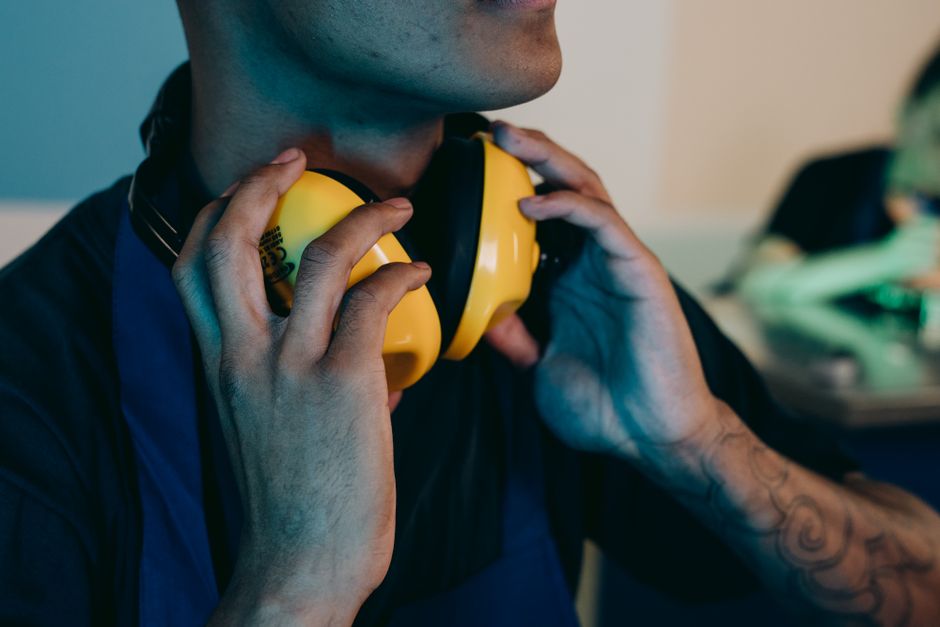
- Use hearing protection around genuinely loud sources, such as live drums or amplified instruments. It’s not a substitute for controlling exposure.
- Don’t treat the volume knob as a fatigue fix. If the mix feels unclear, take a break before reaching for more level.
In the room, I keep a water bottle where I can see it and a timer where I can hear it. Neither is magic; both make it harder to drift into a long, loud stretch without noticing.
Listening breaks are part of the work
A break is not wasted time. It gives your attention a chance to reset and lets you return with a less conditioned perspective. A quick pause while scrolling on your phone may not do much if you’re still listening to music through headphones. For a real reset, step away from the speakers and give your ears some quiet.
Try a 10-minute break after roughly 45–60 minutes of focused listening, or sooner if you notice yourself getting irritable, turning things up, or making lots of tiny changes without a clear reason. The exact interval isn’t a rule for everyone. The important part is to make listening breaks planned rather than waiting until your ears or judgment feel cooked.
A practical reset routine
- Save the session and write down the question. For example: “Is the lead vocal clear on the second chorus?”
- Step away from the monitors and headphones. Avoid filling the whole break with more audio.
- Drink water and move around. A little distance from the chair and screen helps mark a genuine pause.
- Return at your usual level. Listen for the specific question before touching a control.
- Keep or reject the change deliberately. If you can’t explain why the move improves the song, leave it for another pass.
For a longer reset, leave the room or end the session. Sleep can change your perspective more than another hour of looping the chorus. If it’s late and you’re caught in a cycle of making and undoing changes, stopping is often the most productive mix move available.
Use a fixed start time and a clear session shape
Sessions that start “whenever” often end at sunrise by accident. A fixed start time helps you plan your energy, meals, and attention—and gives the session a boundary. Decide when you’ll begin, when you’ll take breaks, and when you’ll stop before the first playback. That can be as simple as a start time, two scheduled breaks, and a firm end time.
Try dividing the work into passes. During one pass, balance the main elements. During another, check tonal decisions. Later, review effects and details. Don’t audition every possible fix at once. When a thought comes up outside the current task—“maybe the snare needs a different sample”—write it down and keep moving unless it is clearly urgent.
Food matters to sustained attention, too. Energy drinks are not a meal, and caffeine can’t replace sleep or a proper break. The USDA’s MyPlate resources offer general guidance on building balanced meals; they are not a mixing plan, but the basic reminder to eat a real meal is useful on a long workday. Keep water nearby and plan food before the session runs late.
Some people also look into wellness products or supplements, including brands such as Joy Organics. Don’t assume a product will solve ear fatigue or make late-night decisions reliable. Check ingredients, consider interactions and individual health needs, and ask a qualified clinician if you have questions. For mix judgment, the dependable basics remain rest, moderate levels, breaks, and a schedule you can actually keep.
Check translation without chasing every playback system
A different playback system can reveal a problem, but it can also invite endless second-guessing. Use a few familiar references with specific questions rather than playing the mix on everything you can find. A phone speaker can help you check whether the lead vocal and main hook remain understandable when bass and stereo width are limited. It cannot tell you precisely how the low end or stereo image translates.
Cheap earbuds can offer another useful check: are vocals too loud, is the hi-hat irritating, or does the chorus lose its shape? But earbuds vary widely, and their fit and tuning affect what you hear. Treat them as a secondary perspective, not as the final judge. Make a note of what you notice, then return to your main https://highstylife.com/should-i-mix-at-low-volume-most-of-the-time/ monitors at a moderate level and verify the issue before changing the mix.
What you notice Possible reason Useful next step You keep turning the monitors up Fatigue, a changing reference, or an unclear mix question Take a quiet break; return at your usual level You undo the same move repeatedly Decision fatigue or a change that is too subtle to judge now Save a version and revisit the decision next session The mix sounds harsh after a long stretch Adaptation, high monitoring level, or a genuine tonal issue Pause first, then check briefly at a comfortable level Phone playback loses the vocal The vocal may be masked or lack enough midrange presence Verify on your main system before making a small adjustmentMake decisions easier to trust
Before changing anything, name the problem in plain language: “The verse vocal gets lost when the bass enters.” Then make one change and compare it at matched playback levels. If the mix sounds “better” only because it got louder, the comparison is not fair. Use bypass or level matching when practical, and avoid stacking several untested changes before listening again.
Keep a short decision log. Write what you changed and why: “Reduced pad level 1 dB; it was masking the vocal in the second verse.” This protects you from repeating the same debate tomorrow. When you reach the end of the session, write one line for next time—“Check second-verse vocal against the reference at low level”—then close the project. That little note is a better handoff than trying to remember everything after midnight.
A simple session plan
- Set a fixed start and stop time.
- Choose one main goal for the session.
- Monitor at a comfortable level; save loud checks for brief, specific tests.
- Set a timer for listening breaks, including a 10-minute quiet reset.
- Use the phone speaker or cheap earbuds for limited translation checks, not endless approval loops.
- Eat, drink water, and avoid substituting energy drinks for a meal or sleep.
- End with a one-line “next session” note.
Your mix decisions usually get worse because the conditions for making them have worsened: attention is spent, your ears have adapted, the volume may have crept up, or the session has outlasted your useful focus. You don’t have to solve every uncertainty tonight. Set a schedule, keep the level sensible, take real listening breaks, and come back with fresh ears. A mix that waits until tomorrow is often better served than one more hour of tired tweaking.